
Itawamba County Has a Split Clerk Structure
Itawamba County uses a split clerk structure. Two elected clerks divide the court records. The Circuit Clerk is Ceburn Gray. The Chancery Clerk is Michelle Clouse. Both work out of the county courthouse at 201 West Main Street in Fulton. Each clerk runs a separate office, a separate phone line, and a separate set of books.
The split follows the Mississippi court map. Circuit Court hears felony cases, large civil suits, and appeals from lower courts. Chancery Court hears divorce, estates, land disputes, and guardianship matters. The Circuit Clerk serves the Circuit Court and also the County Court. The Chancery Clerk serves the Chancery Court and the county Board of Supervisors. One building holds two record systems, so the case type tells you which door to use.
Itawamba County Circuit Clerk
Clerk: Ceburn Gray
201 West Main Street
Fulton, MS 38843
(662) 862-3511
Fax: (662) 862-4006
cgray@itawamba.gov
Note: Circuit and Chancery records share one address but two staffs, so name the case type when you call so the right office picks up.
What the Itawamba County Circuit Clerk Handles
The Circuit Clerk keeps the general court docket. That docket lists the names and parties in each case. Pleas and indictments are entered there and tied back to the minute book. Records sent up from lower courts on appeal land here too. For felony charges and large civil suits, the Circuit Clerk's counter is the local starting point.
The office carries duties that reach past the courtroom. The Circuit Clerk serves as the county voter registrar and runs election-process work. The office issues marriage licenses and manages jury duty. It acts as clerk for both the Circuit Court and the County Court. Many residents meet this office first through a jury summons or a license, not a case.
- Felony criminal case files, pleas, and indictments
- Civil Circuit Court suits and the general court docket
- Records from Justice and Municipal Courts on appeal
- Marriage licenses issued at the courthouse counter
- Jury duty notices and juror management
- Voter registration and county election administration
Felony and circuit civil files start here, then move on appeal to the Circuit Court level and beyond. The general docket is the index that ties each filing to a minute-book page. A case that began as a Justice Court appeal will show its lower-court papers in this same docket.
Itawamba County sits in the First Circuit Court District. That district covers seven counties, and four circuit judges share the load. The Circuit Clerk's office is the local point of contact for those cases, while the district administrator in Tupelo handles calendar and scheduling questions across the region.
Itawamba County Chancery Clerk Records
The Chancery Clerk holds the equity side of county records. Michelle Clouse runs the office at the same West Main Street address. The clerk attends chancery sessions and keeps minute books that record the judge's directions. The office takes in bills, petitions, motions, accounts, and inventories. It also serves as clerk to the Board of Supervisors and prepares the claims docket, the list of money demands against the county.
This is the office for land and family records. The Chancery Clerk records and preserves deeds of trust, mortgages, mineral leases, and survey plats. Divorce files, estates, adoptions, guardianships, conservatorships, and youth-court references all route through Chancery. Probate of a will is a Chancery Court matter handled at this counter.
Itawamba County Chancery Clerk
Clerk: Michelle Clouse
201 West Main Street
Fulton, MS 38843
(662) 862-3931
Fax: (662) 862-3931
mclouse@itawamba.gov
Land records also carry an online index. The county runs Itawamba County Chancery Records Online for deed, mortgage, and lien lookups.
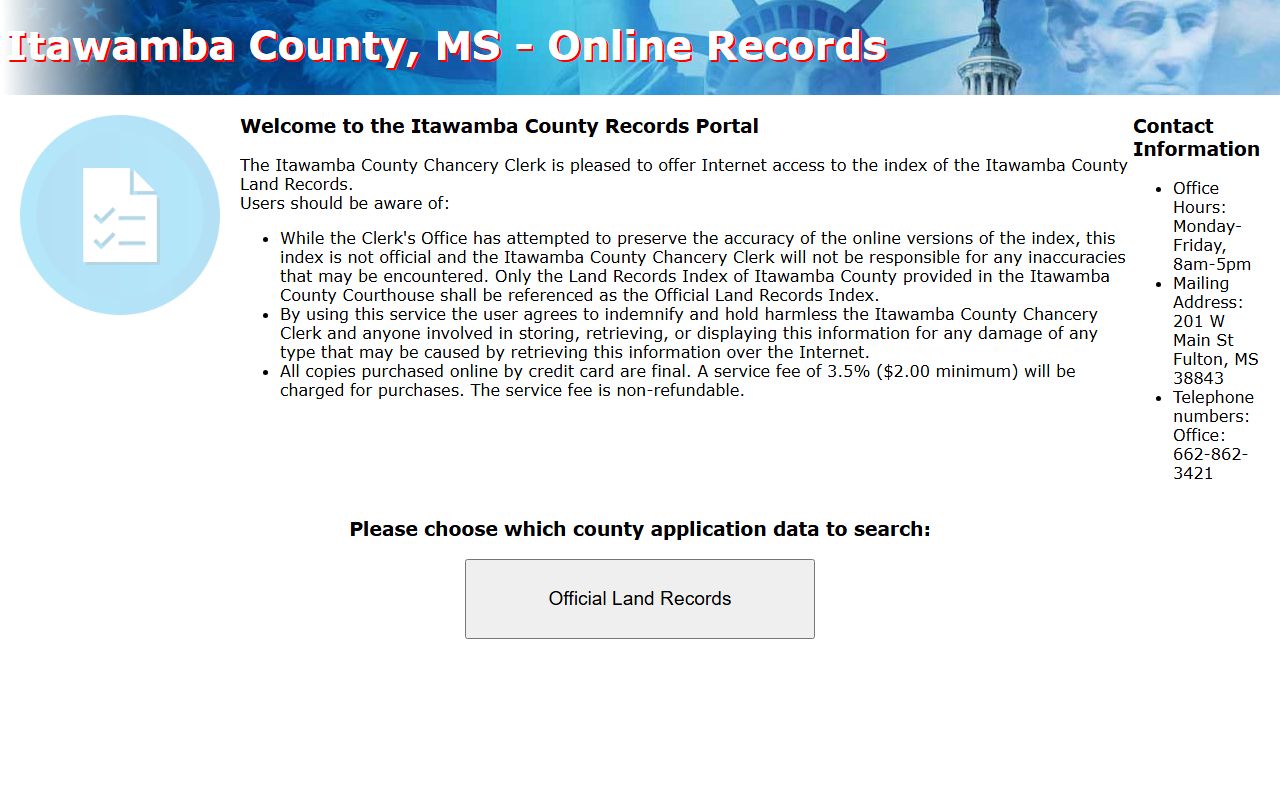
The portal warns that its online index is not the official record. The courthouse Land Records Index controls, so confirm anything important at the Chancery Clerk's counter before you rely on it. The site lists office hours of Monday through Friday, 8 a.m. to 5 p.m., and gives a records line for questions about a deed or lien.
How to Request a Certified Copy
A certified copy carries the clerk's seal and proves a record is genuine. Courts, banks, and agencies often demand the certified version, not a plain printout. Both clerk offices issue certified copies of the files they hold. The steps below keep the request moving.
- Pick the right office. Felony, civil suit, and marriage records go to the Circuit Clerk. Divorce, estate, land, and probate records go to the Chancery Clerk.
- Gather the case detail. Bring names of the parties, a case or instrument number if you have one, and the filing year. This narrows the clerk's search.
- Ask for the certified copy by name. Tell the clerk how many certified copies you need and for which document.
- Pay the copy and certification charge. Recording and copy fees are set by county and state schedules listed below.
- Collect at the counter or by mail. In-person pickup is fastest. Mail requests should include payment and a return address.
Note: Call the clerk before mailing a time-sensitive request, since the county does not publish a fixed copy turnaround for certified court documents.
Itawamba County Public Records Requests
Some records are administrative, not court case files. For those, the county uses a written public-records request under the Mississippi Public Records Act, Miss. Code Ann. § 25-61-1. The Chancery Clerk is the office that receives these requests. The county publishes a request form, a policy, and a fee schedule, and accepts the form by mail, hand delivery, email, or fax to 201 West Main Street, Fulton.
The county states that requests are answered within seven days under the Public Records Act and county procedures. The Mississippi Ethics Commission publishes the full text of the act, including the response and denial rules.
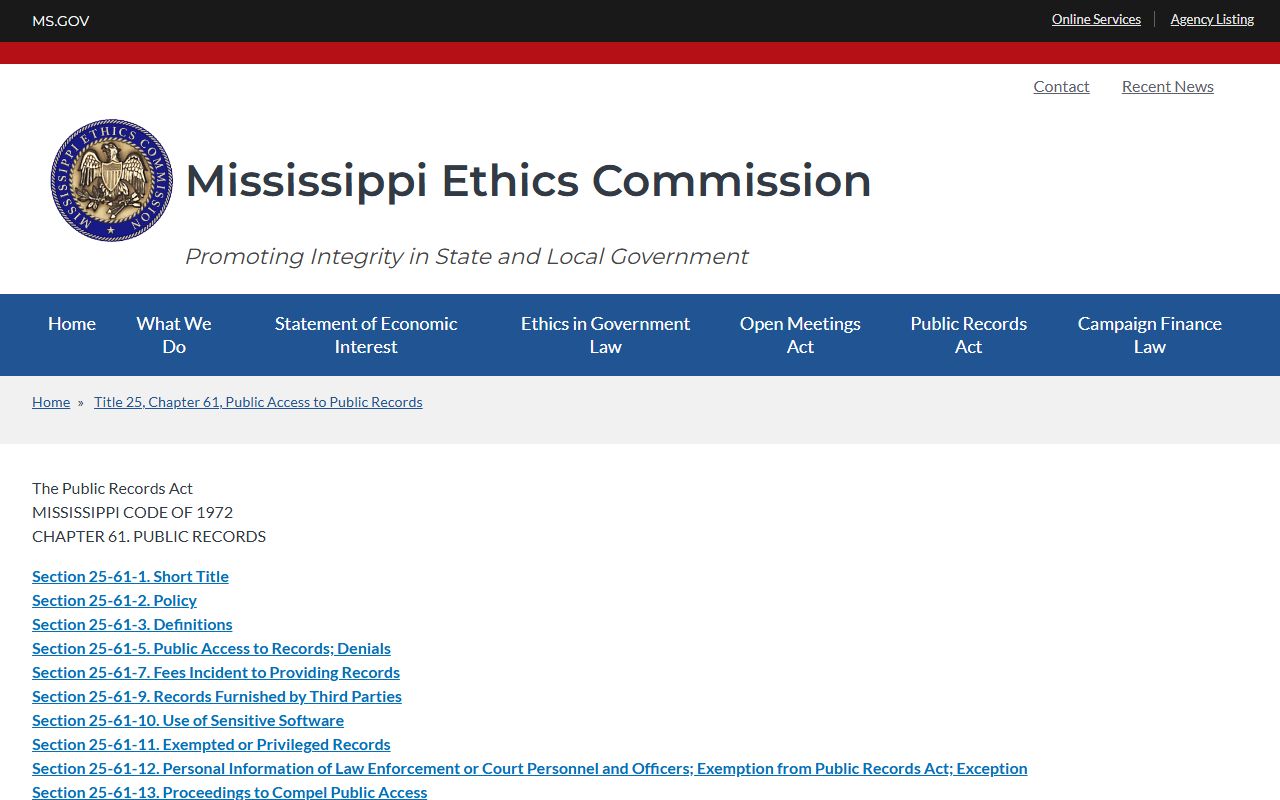
That page sets the legal floor every county office follows. The county request form itself collects the fields shown next.
| Form Field | Required | Notes |
|---|---|---|
| Name of requester | Yes | Identifies who the county responds to |
| Address and contact | Yes | Mailing address, phone, email, or fax |
| Records requested | Yes | Must describe identifiable public records |
| Delivery or inspection method | Likely | Mail, hand delivery, email, or fax |
| Signature and date | Yes | Submitted to the Chancery Clerk |
| Fee acknowledgement | Likely | Search, redaction, and copy costs may apply |
The full policy and fee schedule live in the county Request for Public Records document. Read it before you send a request so the fee terms are no surprise.
Itawamba County Clerk Fees
Clerk fees fall into two groups. Recording and land-record fees are set by the Chancery Clerk under state schedules. Electronic court access carries its own charges through the statewide system. Public-records requests can add staff time, redaction, and duplication costs spelled out in the county policy. The table lists the published figures.
| Item | Amount |
|---|---|
| Deed, deed of trust, or instrument (first 5 pages) | $26 |
| Each additional recorded page | $1 |
| Release, modification, or attached instrument | $27 per instrument number |
| Online land-record copy service fee | 3.5% ($2 minimum) |
| PAMEC annual registration | $10 |
| PAMEC document access | $0.20 per page |
The online land-record service fee is non-refundable, so copies bought through the portal are final. The 3.5% charge applies to credit-card purchases on the Chancery Records site and never drops below the two-dollar minimum. Counter requests avoid that surcharge.
Note: Recording fees apply per instrument, so a multi-page deed and a separate release are charged on two different lines, not as one filing.
MEC, PAMEC, and the Clerk Counter
Mississippi runs its trial courts on Mississippi Electronic Courts. The Judiciary says Circuit, Chancery, and County Courts file through MEC, and the public views digital documents through the subscriber portal PAMEC. Itawamba County court records flow through this same system. The Mississippi Electronic Courts page hosts the helpdesk and access details.
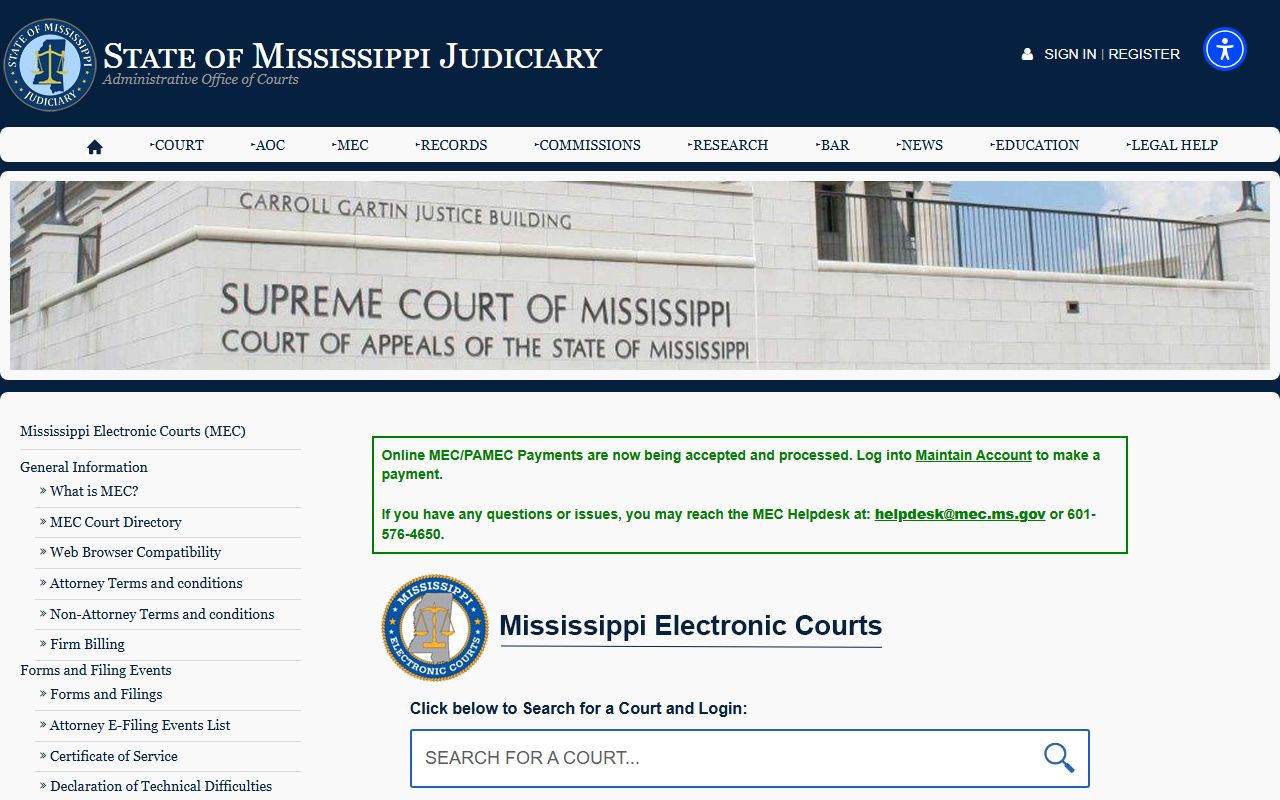
That landing page points filers and the public to the right tools. The general-information page explains what the system actually returns.
MEC lets users reach docket information, view and download documents, and pull case data from courts already on the system. The MEC general information page lays out those functions in plain terms.
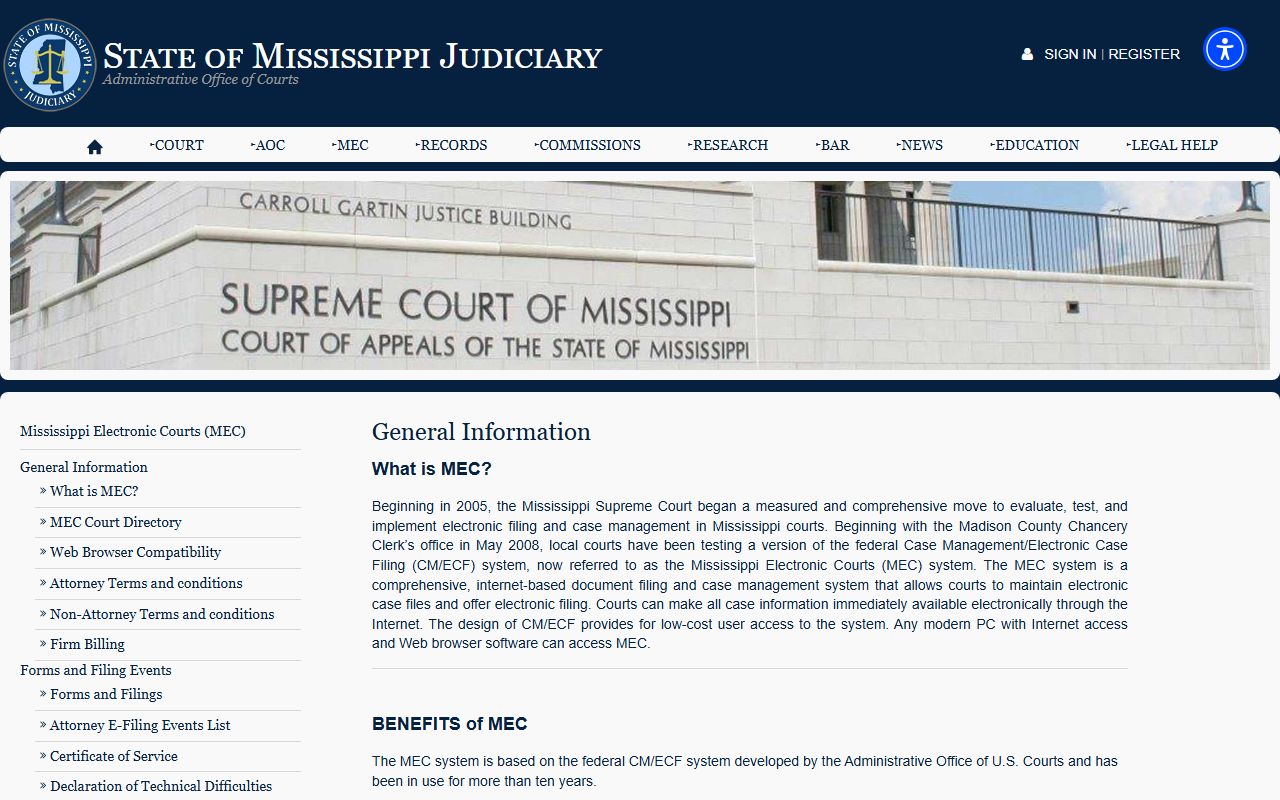
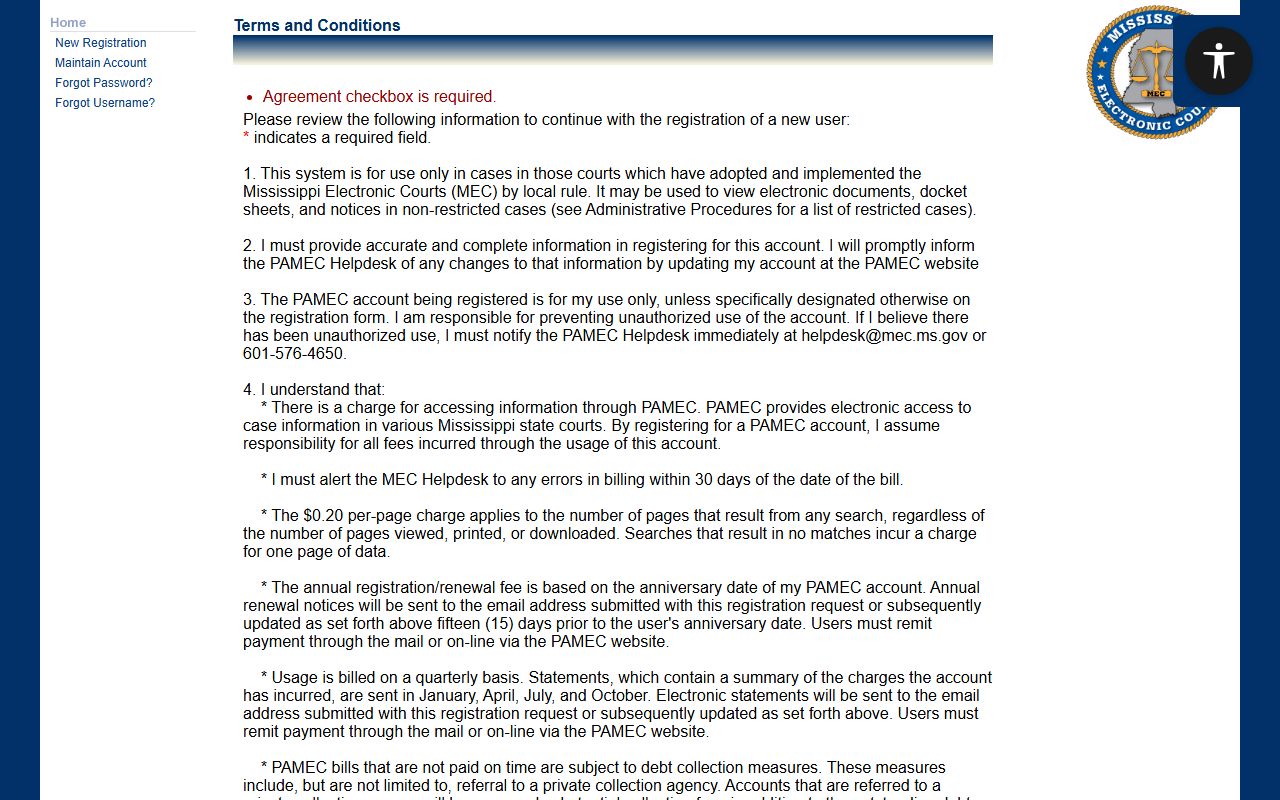
Public access still runs through registration. A non-attorney must sign up and accept the charge terms before viewing documents.
Registration costs ten dollars a year, and the portal adds a per-page charge for documents you open. The PAMEC non-attorney terms spell out those charges for public users.
The portal is not the only route. The clerk counter stays the fallback for certified copies, older paper files, sealed or restricted records, and any file the portal does not show. When PAMEC fails a reader, the Circuit Clerk at (662) 862-3511 or the Chancery Clerk at (662) 862-3931 can still pull the record by hand.