
How to Search Itawamba County Court Records
Mississippi runs trial-court filing through Mississippi Electronic Courts, known as MEC. The Mississippi Judiciary says Circuit, Chancery, and County Courts e-file through MEC, and the public views digital court documents through a subscriber portal called PAMEC. PAMEC is the closest thing to a statewide search for Itawamba cases. It is not free and not complete. Registration is required, and remote access reaches only eligible public files. Sealed and sensitive cases stay off the portal, so a clear result there is not proof a record does not exist.
Before searching, pin down the court that handled the case. Felony, civil lawsuit, and lower-court appeal records point to the Circuit Clerk. Divorce, estate, guardianship, and land matters point to the Chancery Clerk. Small civil claims, traffic tickets, and misdemeanors point to Justice Court or a city court. The case type narrows the search to one office fast. A name and rough filing year help at the counter or in the portal.
The Mississippi Judiciary homepage is the entry point for the statewide system and links out to each court division.
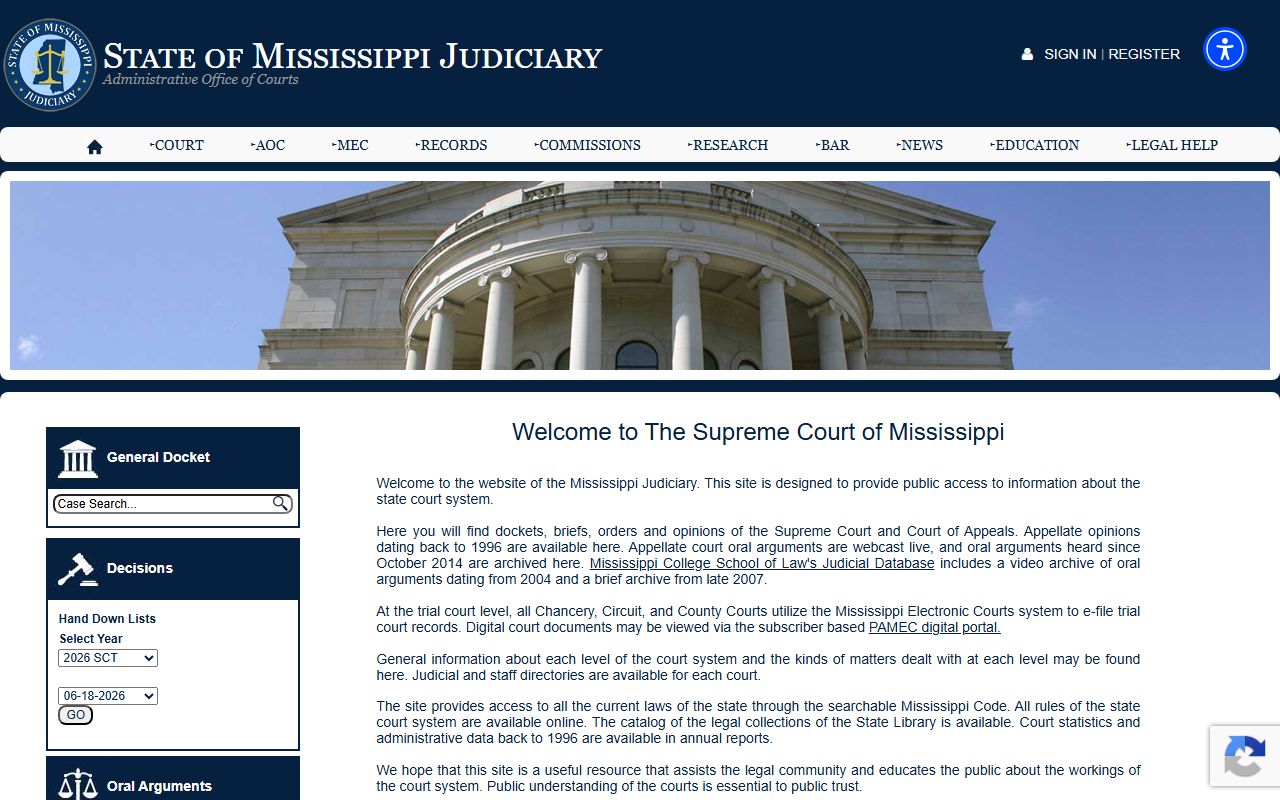
The page confirms that Circuit, Chancery, and County Court documents move through MEC and that PAMEC is the public viewing route. That single fact sets the order of the steps below.
- Identify the case type and the Itawamba court that handled it.
- For electronic Circuit or Chancery files, open PAMEC and create an account.
- Accept the annual registration fee and the per-page charge terms.
- Search by party name or case number once you are logged in.
- For certified copies, older paper files, or restricted records, contact the clerk's counter directly.
Itawamba County Court Records Search Fields
PAMEC does not show a public search box until a user registers. The registration start page builds the account and sets the fee terms first. Non-attorney users accept terms that spell out the charges for viewing case information. The fields below come from the PAMEC registration and access screens, so a reader knows what to expect before paying anything.
| Field Label | Type | Required | Notes / Format |
|---|---|---|---|
| User Type | Selection | Yes | Attorney or non-attorney; the registration start page shows a $10 annual fee. |
| Terms and Conditions | Acknowledgement | Yes | Non-attorney terms explain the charges for accessing information. |
| Account / Login | Text and password | Yes | A login is required to reach subscriber search functions. |
| Court / Case Search | Gated | Gated | The search interface is not visible without registration. |
| Document Charge | Fee notice | Yes | A $0.20 per-page charge applies to pages accessed. |
The PAMEC registration start page is where a non-attorney sets up access and reviews the fee terms.
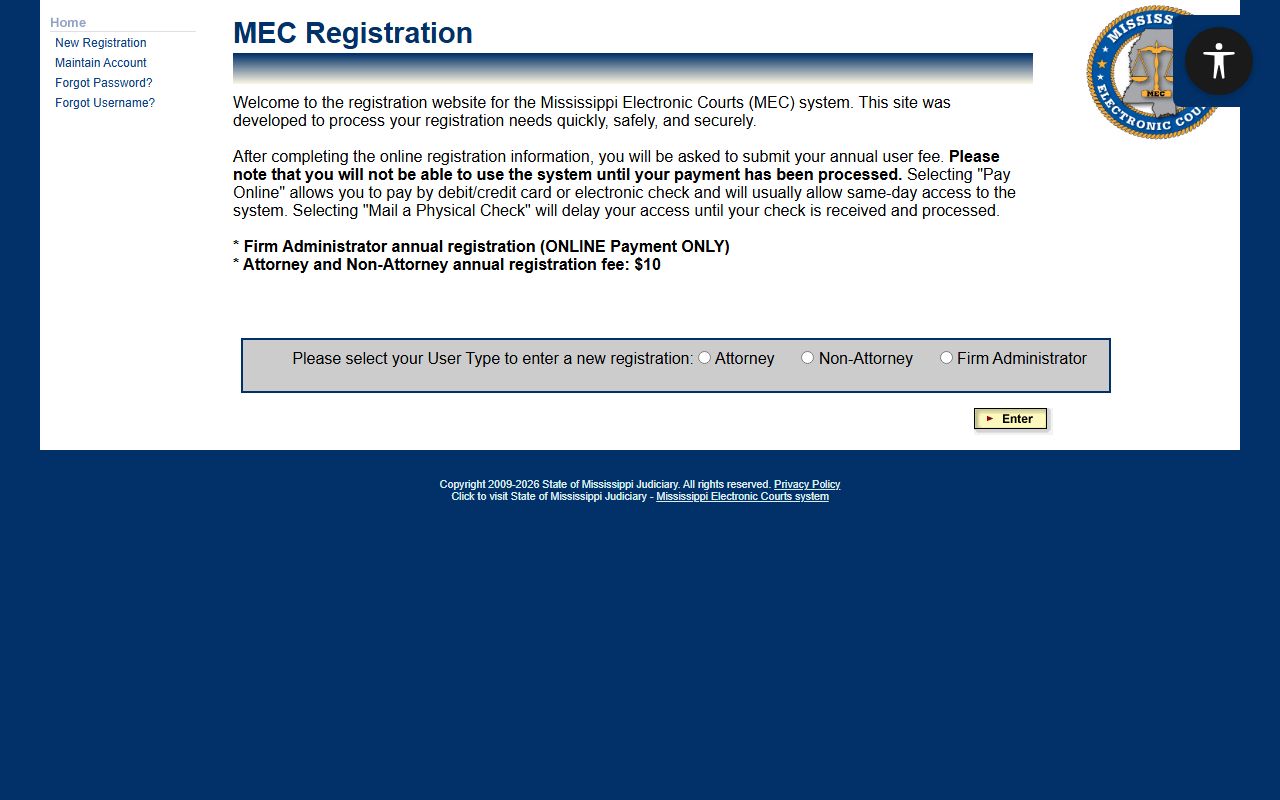
Visit the PAMEC registration portal to choose a user type and begin. The per-page charge means a broad name search can add up, so a tight search saves money.
Court Record Access Channels in Itawamba County
Itawamba County has no single unified court-records search. The work splits across two clerk counters at the courthouse, a separate Justice Court office, the city courts, and a county public-records process. Each channel holds a different slice of the record set. The two clerks share one building at 201 West Main Street in Fulton, yet they keep separate files.
The Circuit Clerk keeps the law side of the docket. The Chancery Clerk keeps the equity side. Matching the case to the correct clerk is the single biggest time-saver in any Itawamba records search.
- PAMEC and Mississippi Electronic Courts: electronic Circuit and Chancery case and docket documents, where remote access is allowed.
- Circuit Clerk counter: felony files, civil circuit cases, lower-court appeals, indictments, pleas, and the general court docket.
- Chancery Clerk counter: divorce, estates, guardianships, conservatorships, land disputes, and chancery minutes.
- Chancery Records Online: land-record indexes, board minutes, federal tax liens, and powers of attorney.
- Justice Court: misdemeanors, civil actions under $3,500, traffic tickets, bonds, and warrants.
- Municipal courts and the county public-records request: city ordinance and traffic matters, plus a written request to the Chancery Clerk for records no portal shows.
The Mississippi Judiciary's Circuit Court overview explains the felony and civil work that runs through the Circuit Clerk.
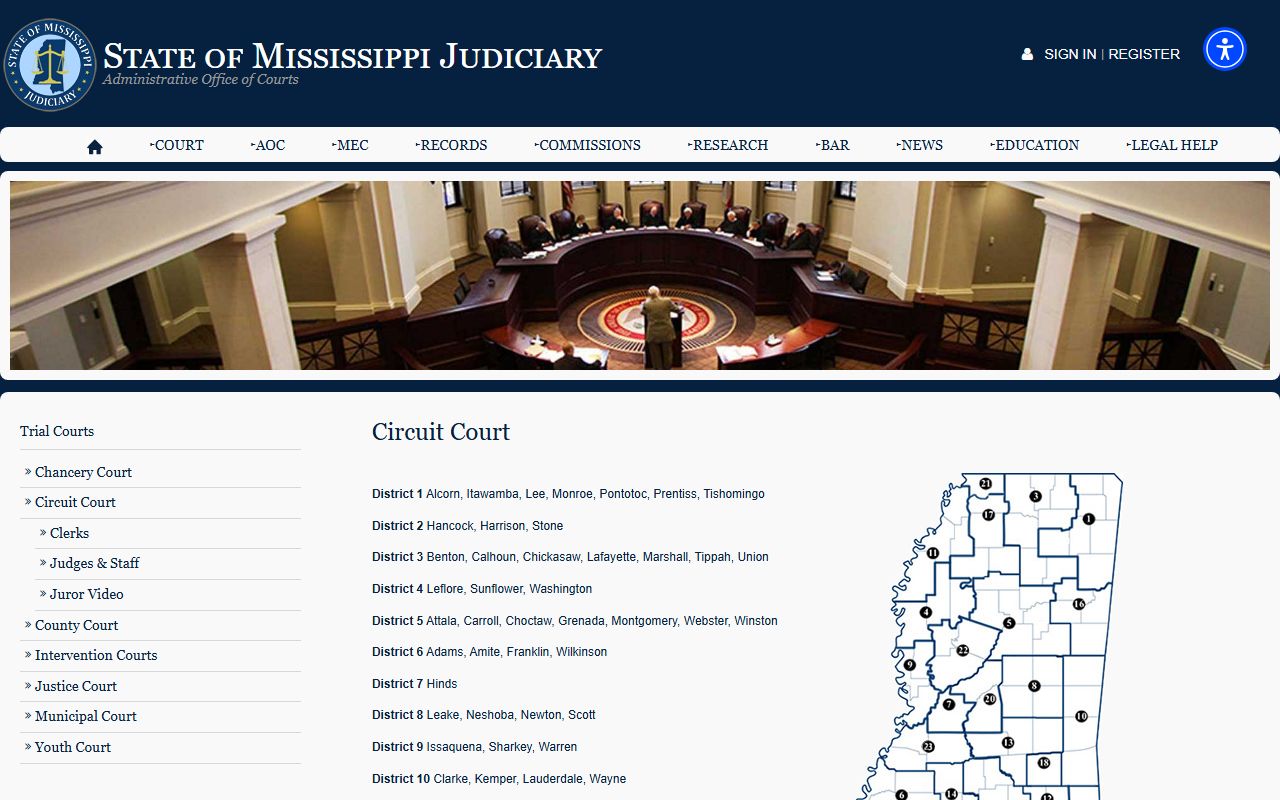
The Circuit Court page confirms that felony prosecutions, civil lawsuits, and appeals from lower courts land here. Those are the same files the Itawamba Circuit Clerk indexes in the general court docket. Hearing dates for these cases appear in the Itawamba County court dockets rather than the case file itself.
Types of Itawamba County Court Records
The record set spans both trial-court divisions and the lower courts. Circuit Court produces the felony and large-civil files. Chancery Court produces the family, estate, and land files. Justice Court and the city courts produce the misdemeanor and traffic files. Each division keeps its own docket, so the type of case decides where the paper lives.
The categories below cover the main records an Itawamba search turns up. Restricted families like youth court and adoption are handled separately further down.
- Civil court records: complaints, answers, motions, orders, and judgments in Circuit and Chancery cases.
- Criminal court records: felony indictments, pleas, dispositions, and sentences entered in Circuit Court.
- Family and divorce records: divorce, custody, adoption, guardianship, and conservatorship files in Chancery Court.
- Probate and estate records: wills, inventories, accounts, and estate petitions in Chancery Court.
- Traffic records: tickets and payments handled by Justice Court or a city court.
- Land and lien records: deeds of trust, mortgages, plats, and federal tax liens kept by the Chancery Clerk.
The Mississippi Judiciary Justice Court page describes the lower-court files that never reach the Circuit Clerk.
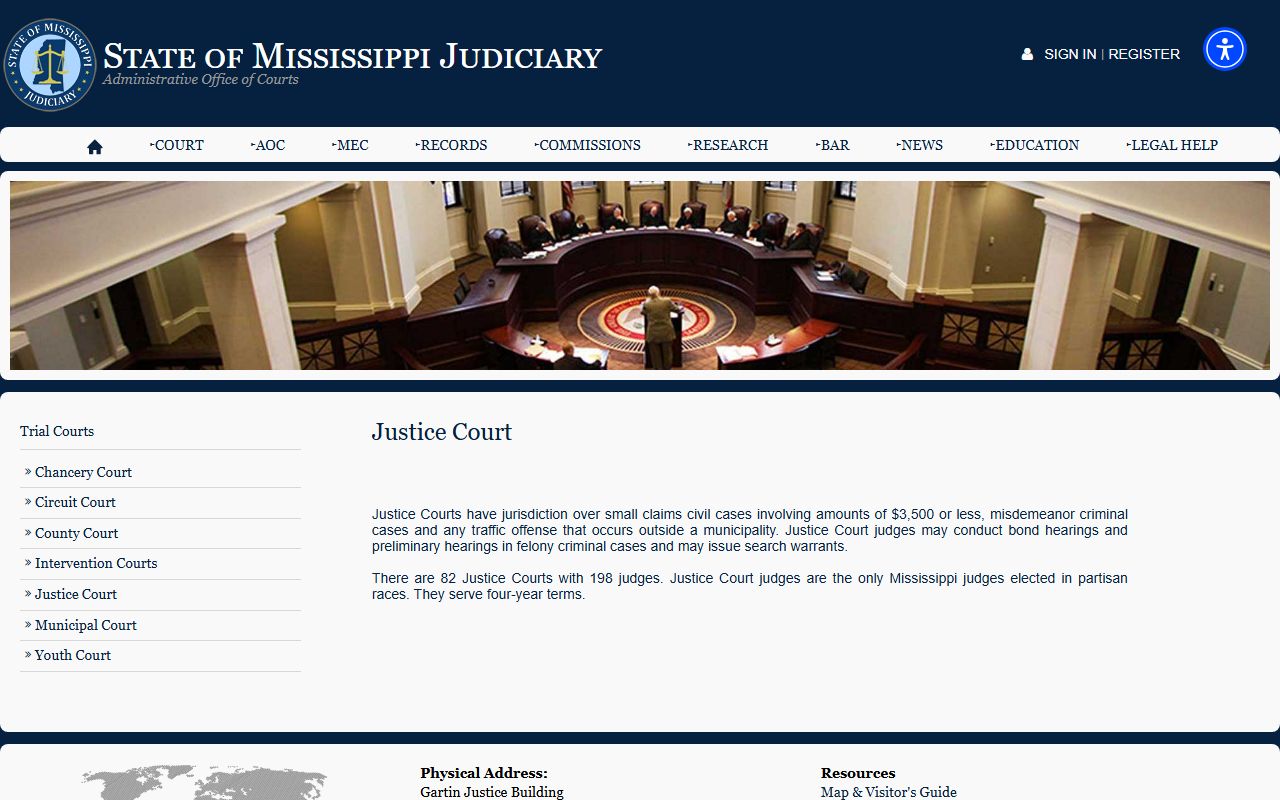
The Justice Court page sets the line at $3,500 for civil claims and covers misdemeanors and traffic offenses outside the cities. The county Justice Court office in Fulton holds those paper records.
What Itawamba County Court Records Show
A court record is more than a verdict. It is the full chronological file the clerk builds as a case moves. The Circuit Clerk's general docket names every party and references pleas and indictments to the minute book. The Chancery Clerk receives motions, petitions, accounts, and inventories. The table below lists the fields a typical Itawamba case file carries, drawn from the clerks' own descriptions of their records.
| Field | What It Shows |
|---|---|
| Case Number | The court-assigned identifier; Itawamba does not publish a public case-number format. |
| Court Name | Circuit, Chancery, Justice, or Municipal Court, depending on jurisdiction. |
| Parties | Plaintiff and defendant, state and defendant, or petitioner and respondent. |
| Plea and Indictment | Entered on the Circuit Court docket and referenced to the minute book. |
| Motions and Petitions | Filings the Chancery Clerk receives, along with accounts and inventories. |
| Disposition | The outcome of the charge or the case. |
| Financial Fields | Fines, costs, bond, restitution, and traffic-ticket amounts where they apply. |
The Mississippi Judiciary Chancery Court overview lays out the equity and family records that fill the Chancery Clerk's files.
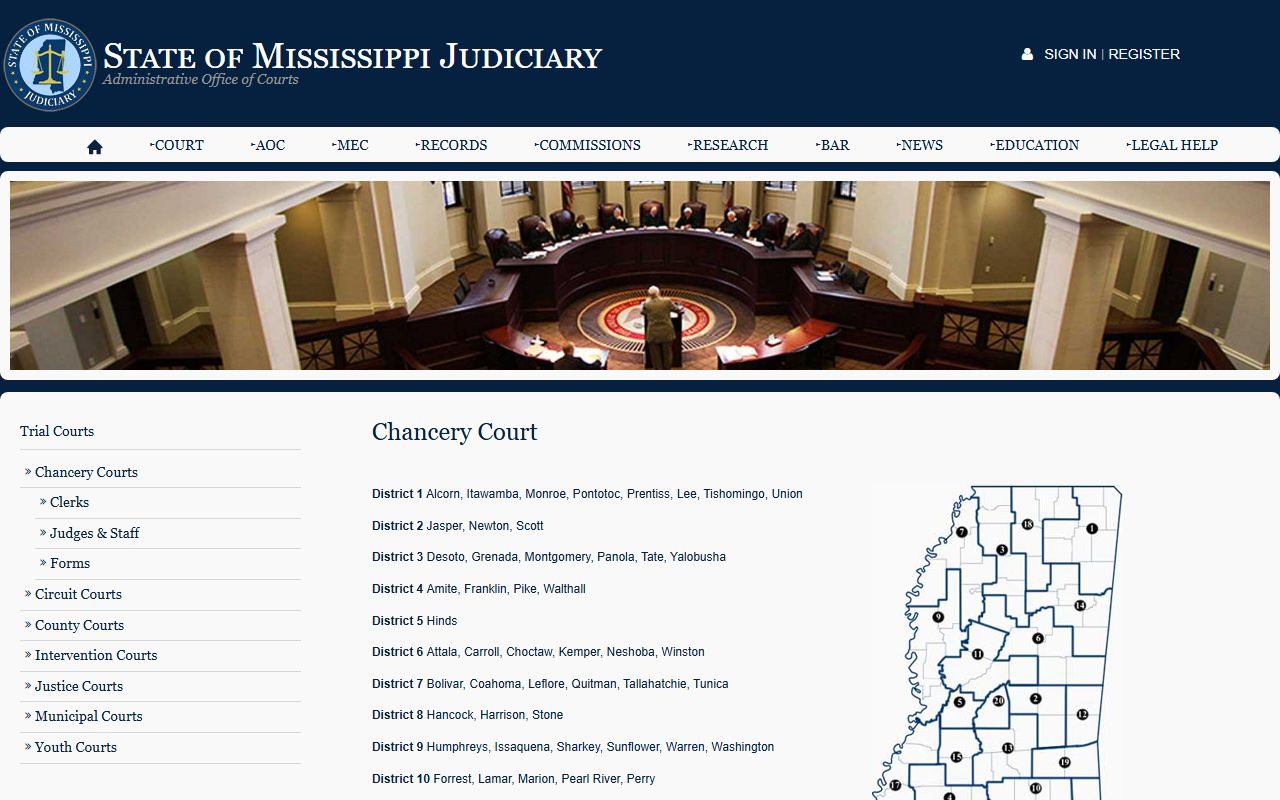
The Chancery Court page covers divorce, probate, guardianship, and mental-health matters. Those files often carry sealed exhibits, so the public docket may show less than the full record.
Note: Itawamba did not publish a standard public case-number format, so searching by a party's full name is usually the most reliable method.
Public Access Framework for Itawamba County Court Records
Mississippi treats court and county records as open by default. The Mississippi Public Records Act, Miss. Code Ann. § 25-61-1, makes public records available for inspection unless another law shields them. A county body that has adopted procedures generally must answer within seven working days under § 25-61-5. Itawamba County publishes a public-records request form and tells requesters to submit it to the Chancery Clerk by mail, hand delivery, email, or fax.
Access does not always mean free or instant. PAMEC charges a per-page fee and requires registration. Certified copies from the clerk carry a fee. For a county administrative record rather than a court-case document, the county public-records request form is the right channel. The statutes most often in play for Itawamba court records appear below.
| Statute | What It Means |
|---|---|
| Miss. Code § 25-61-1 | Public records are open for inspection unless a law provides otherwise. |
| Miss. Code § 25-61-5 | A public body generally must produce or deny a record within seven working days. |
| Miss. Code § 99-19-71 | Qualifying arrests, dismissals, and convictions may be expunged by petition. |
| Miss. Code § 43-21-255 | Youth-court records involving children are not ordinary open records. |
| Miss. Code § 93-17-25 | Adoption proceedings and records are confidential except by court order. |
| Miss. Code § 41-21-97 | Mental-health treatment and patient records are confidential. |
City courts fall under the same open-records framework. The Mississippi Judiciary Municipal Court overview describes the city-level files that the public records act still reaches.
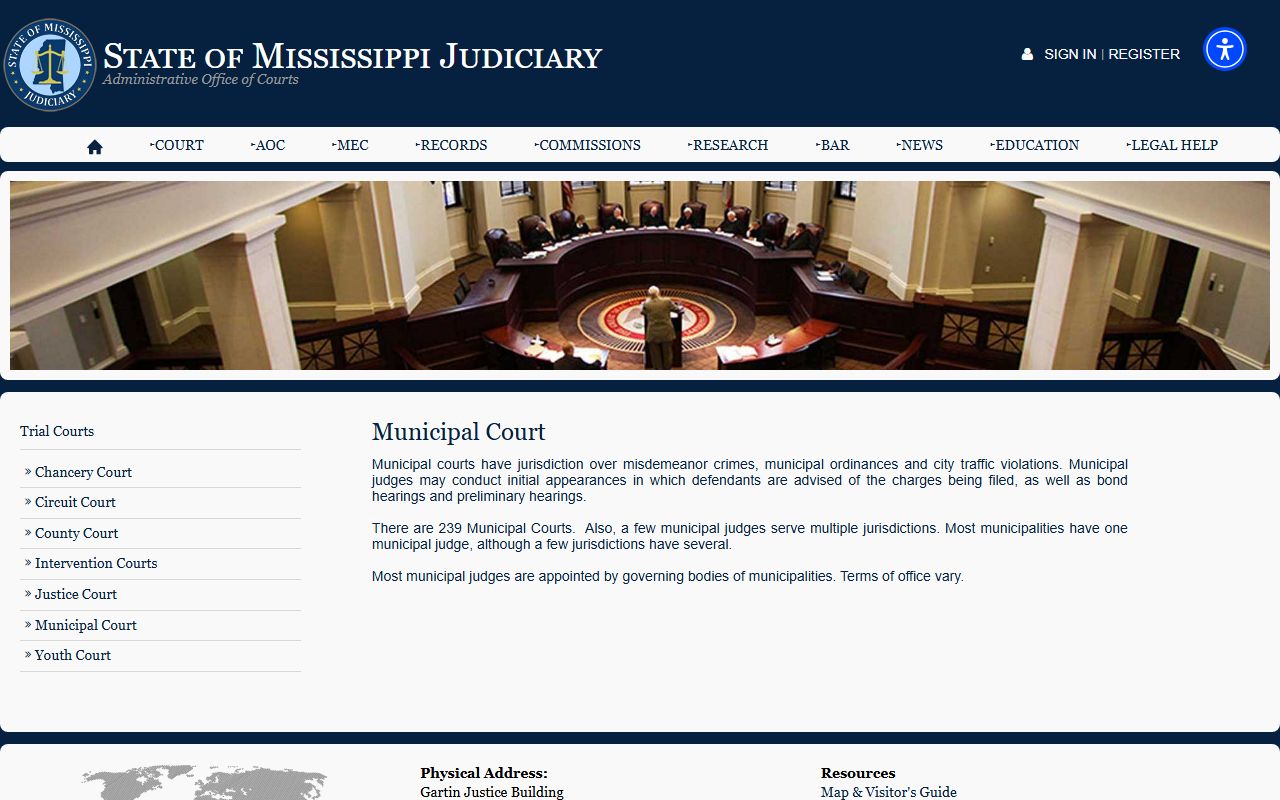
The Municipal Court page covers city ordinances, misdemeanors, and city traffic violations. No official online city-court search was located for Fulton, Mantachie, or Tremont, so a call to the city hall is the fallback for those records.
Records That Are Sealed or Confidential in Itawamba County
Open access has firm limits. Several record families are confidential by statute and never appear in an ordinary name search. Youth-court records involving children are controlled by Miss. Code § 43-21-255. Adoption proceedings are confidential under § 93-17-25. Mental-health treatment records are shielded by § 41-21-97. Public court files also redact Social Security numbers, financial account numbers, minor names, and protected addresses before release.
Sealed and expunged records are a separate matter. Once a court seals or expunges a file, it should not surface as a public search result. Mississippi expunction is court-driven under Miss. Code § 99-19-71. A person does not clear an Itawamba arrest by asking a website to drop it; the person petitions the court that handled the case. The petitioner identifies the arresting agency, court, case number, charge, disposition, and any fines owed.
Eligibility is charge-specific. Some convictions, violent crimes, sex-offender-registration offenses, and listed felonies are excluded. A reader weighing an expunction should verify eligibility with the clerk, the prosecutor, or counsel rather than a generic checklist. The same caution applies to the full Itawamba County criminal court records, where sealed dispositions may not match what an old public file shows.
Note: A clear PAMEC result is not proof a record never existed, because sealed, juvenile, and adoption files are removed from public remote access by law.
In-Person Court Record Requests
Older paper files, certified copies, and restricted-access review still mean a trip to the courthouse. Both clerks sit inside the Itawamba County Courthouse at 201 West Main Street in Fulton. The Circuit Clerk holds the criminal and civil law records. The Chancery Clerk holds the divorce, estate, and land records and receives county public-records requests. Bring a full name, a case or filing year if known, and a payment method for copy fees.
Itawamba County Circuit Clerk
Ceburn Gray, Circuit Clerk
201 W. Main St.
Fulton, MS 38843
(662) 862-3511
Monday to Friday, 8:00 a.m. to 5:00 p.m.
Itawamba County Chancery Clerk
Michelle Clouse, Chancery Clerk
201 W. Main St.
Fulton, MS 38843
(662) 862-3931
Monday to Friday, 8:00 a.m. to 5:00 p.m.
For lower-court files, the Justice Court office sits apart from the courthouse at 104 Joe Staub Road in Fulton and can be reached at (662) 862-4315. It is the official source for misdemeanor, traffic, and small-claim records and for payment methods on those cases.