
What Probate Covers in Itawamba County
Probate is how a court oversees the transfer of a person's property after death. It confirms a will when one exists. It appoints someone to gather assets, pay debts, and pass what is left to the right people. Probate also reaches matters that are not about death at all. Guardianships protect minors and adults who cannot manage their own affairs. Conservatorships manage the money and property of a person who needs help. Mental-health commitments and minor settlements fall under the same court. In Itawamba County, all of these are equity matters, not common-law cases.
Mississippi does not run a separate probate court or a probate building. The Chancery Court hears probate, and the Itawamba County Chancery Clerk holds the files. The Mississippi Judiciary describes Chancery Court as the court for equity, domestic relations, probate, guardianship, and mental-health cases. So estate files, will filings, petitions for letters, inventories, annual accounts, and final orders all run through the Chancery Clerk. That office sits inside the Itawamba County Courthouse in Fulton, the county seat.
Probate Terms Defined
Probate files use words that rarely show up in daily life. A few quick definitions make an Itawamba County estate file far easier to read. The terms below cover the roles and outcomes seen most often in Chancery Court probate papers.
- Testator
- The person who made the will. The will speaks for the testator after death and names who should inherit.
- Executor
- The person named in the will to carry it out. The executor gathers assets, pays debts, and distributes the estate under court oversight.
- Intestate
- Dying without a valid will. When this happens, state law decides the heirs and the court appoints an administrator.
- Administrator
- The person the court appoints to settle an estate when there is no will or no named executor able to serve.
- Guardianship
- A court arrangement that gives one person authority over the care of a minor or an adult who cannot make safe decisions.
- Conservatorship
- A court arrangement that puts a responsible adult in charge of the money and property of a person who needs protection.
How to Search Itawamba County Probate Records
Estate and probate files are not all in one public search box. The records live with the Chancery Clerk, and some case data may appear in the statewide electronic court system. The clerk counter remains the most reliable path for older or non-digitized files. Online tools help when remote access is allowed and the user registers.
- Gather what you know. Have the decedent's full name, the estate name, an approximate filing year, and a case number if you have one.
- Start with the Chancery Clerk. Call or visit the office to ask whether an estate, guardianship, or conservatorship file exists and how to view it.
- Try the electronic court system. Register for PAMEC to view Chancery Court dockets and documents where remote public access is permitted.
- File a public-record request when needed. Submit the county form to the Chancery Clerk for administrative records the clerk holds.
- Request certified copies. Confirm fees and delivery with the clerk before paying for any certified estate document.
Each channel fits a different need. The table below shows the inputs each one expects and the limits to keep in mind.
| Search channel | Inputs | Required | Notes |
|---|---|---|---|
| Chancery Clerk in person or phone | Decedent name, estate name, case number if known, approximate filing year | Case identifier helpful | Best for older or non-digitized estate files. |
| PAMEC electronic courts | Login plus court and case search fields behind registration | Registration required | Annual registration and per-page fees; restricted categories may not be remotely available. |
| Public-record request form | Requester contact, record description, delivery method, signature and date | Yes | Use for county-held records; probate court restrictions still apply. |
Mississippi Electronic Courts cover all trial courts, so the MEC system is where Chancery Court e-filings live. Public viewing runs through the subscriber PAMEC portal, with a small annual fee and a per-page charge. When a subscription does not fit, the clerk counter stays the practical fallback for terminal viewing, certified copies, and files not posted online.
Note: Guardianship, conservatorship, and minor-settlement files may be limited or withheld from remote access, so plan on the clerk counter for those categories.
The Itawamba County Chancery Court and Chancery Clerk
One office anchors probate in the county. The Chancery Clerk attends chancery sessions, keeps the minute books, and receives the petitions, motions, accounts, and inventories filed in estate and guardianship cases. Michelle Clouse serves as the elected Chancery Clerk. Her office handles estates, conservatorships, guardianships, adoptions, divorce, and land records, and it is also where county public-record requests are filed.
Itawamba County Chancery Clerk
Michelle Clouse, Chancery Clerk
201 West Main Street
Fulton, MS 38843
Phone and fax (662) 862-3931
Monday to Friday, 8 a.m. to 5 p.m.
mclouse@itawamba.gov
Because probate is a Chancery Court matter, the judge presiding over an estate sits as a chancellor, and the clerk's minute books record the court's directions. For estates, guardianship, conservatorship, and certified copies, the clerk counter is the best first stop. The office also provides the official county public-records form and answers requests under the Mississippi Public Records Act within seven days.
Itawamba County Probate Fees
Itawamba County did not publish a probate-specific fee schedule in its official online sources. The county did not post probate filing fees, certified-copy fees, or plain-copy fees for estate files. Those amounts should be confirmed directly with the Chancery Clerk before filing or ordering copies. What the county does publish are recording fees for instruments handled by the Chancery Clerk, shown below.
| Item | Amount |
|---|---|
| Deed, deed of trust, power of attorney, or instrument not requiring attachment | $26 for first 5 pages; $1 each additional page |
| Release, modification, or instrument requiring attachment to another instrument | $27 for each instrument number attached |
| Probate filing fee | Not published; confirm with Chancery Clerk |
| Certified copy of an estate document | Not published; confirm with Chancery Clerk |
| Plain copy of an estate document | Not published; confirm with Chancery Clerk |
The recording fees matter for probate because estates often move real property. A deed transferring land out of an estate, or a recorded power of attorney, falls under those amounts. Public-record requests may also carry costs for staff time, redaction, and duplication under the county policy. Always ask the clerk for the current total before you submit payment.
What Itawamba County Estate Records Include
An estate file grows as the case moves. It starts with a petition and can end with a final settlement years later. Each document the fiduciary files becomes part of the public court record unless a law seals it. The list below shows the papers commonly found in an Itawamba County probate file.
- Estate opening petition or complaint, and the will, codicil, and probate order if a will exists.
- Petition for letters testamentary or letters of administration.
- Oath, bond, and the letters issued to the executor or administrator.
- Inventory of estate assets, plus creditor notices and filed claims.
- Accountings, receipts, releases, and the final settlement.
- Guardianship and conservatorship petitions, supporting proof, orders, bonds, and annual accounts.
Guardianship and conservatorship cases follow their own track but stay under Chancery Court supervision. A conservatorship file may hold an inventory, spending requests, accountings, and a closing order. Minor settlement filings round out the categories the Chancery Clerk receives. Reading these papers in order tells the full story of how an estate or protective case was handled.
Restricted Itawamba County Probate Records
Not every probate paper is open to the public. Some categories carry court-access limits even though the broader estate file is public. Guardianship, conservatorship, and minor-settlement matters often touch a protected person's health, finances, or safety, so a court may restrict remote viewing or seal parts of the file.
Important. A public-record request to the Chancery Clerk is not a way around a court-ordered seal. Probate court files keep their own access rules even when the same office answers county records requests.
Mental-health commitment records are confidential by statute and are not browsed like an open estate docket. Adoption files connected to a family matter are also closed. When a category is restricted online, the clerk counter is still the place to ask what may be viewed and what an order or attorney is needed to reach. The county answers public-record requests in writing, but active restrictions on a court file always control.
Federal Matters Near Itawamba County
County Chancery probate is separate from federal court. One overlap people hit is bankruptcy, which can affect a debtor's estate but is handled in federal court, not at the Itawamba courthouse. Bankruptcy for the county runs through the U.S. Bankruptcy Court for the Northern District of Mississippi, based in Aberdeen.
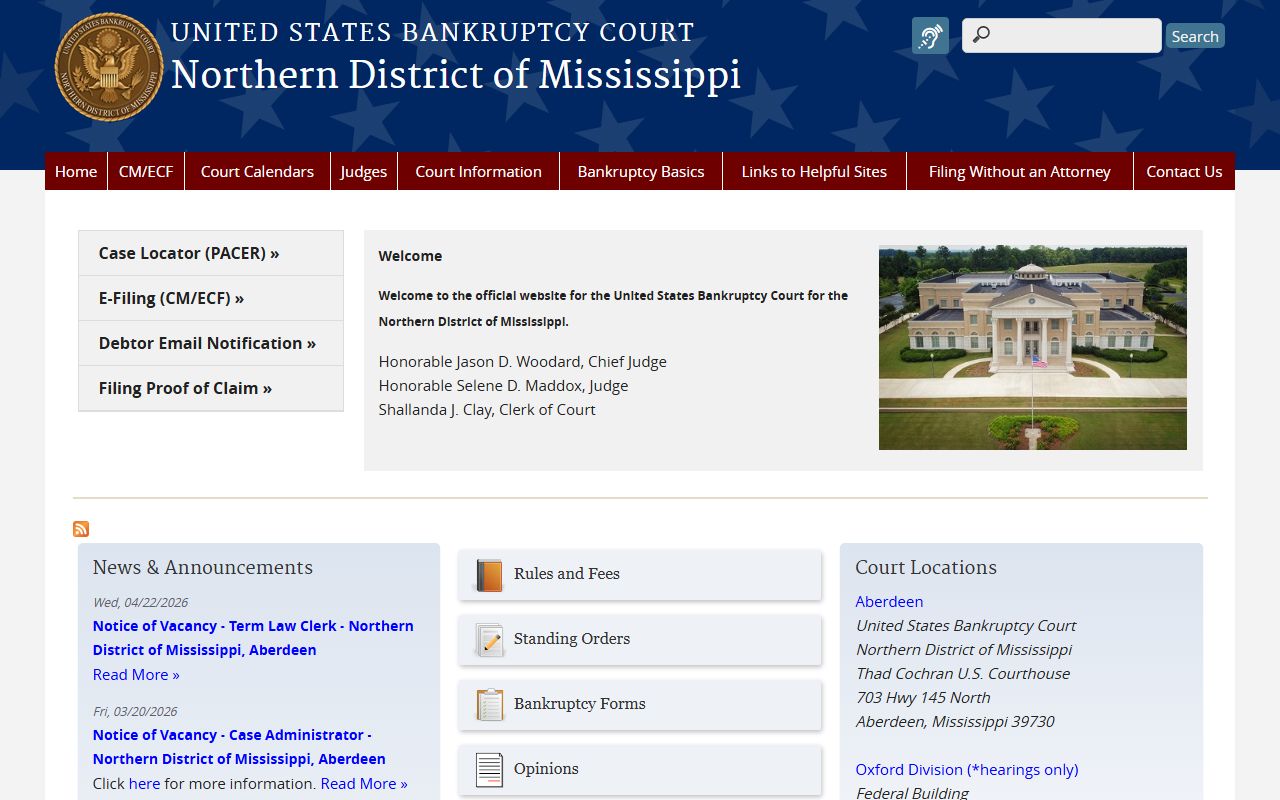
The bankruptcy court site lists the clerk, the judges, and the Aberdeen courthouse on Highway 145. That court, not the Chancery Clerk, is where a county resident's bankruptcy file lives. Federal case documents are reached through a national lookup system rather than a county counter. The PACER court lookup for the Northern District bankruptcy court lists the address, phone, email, and hours.
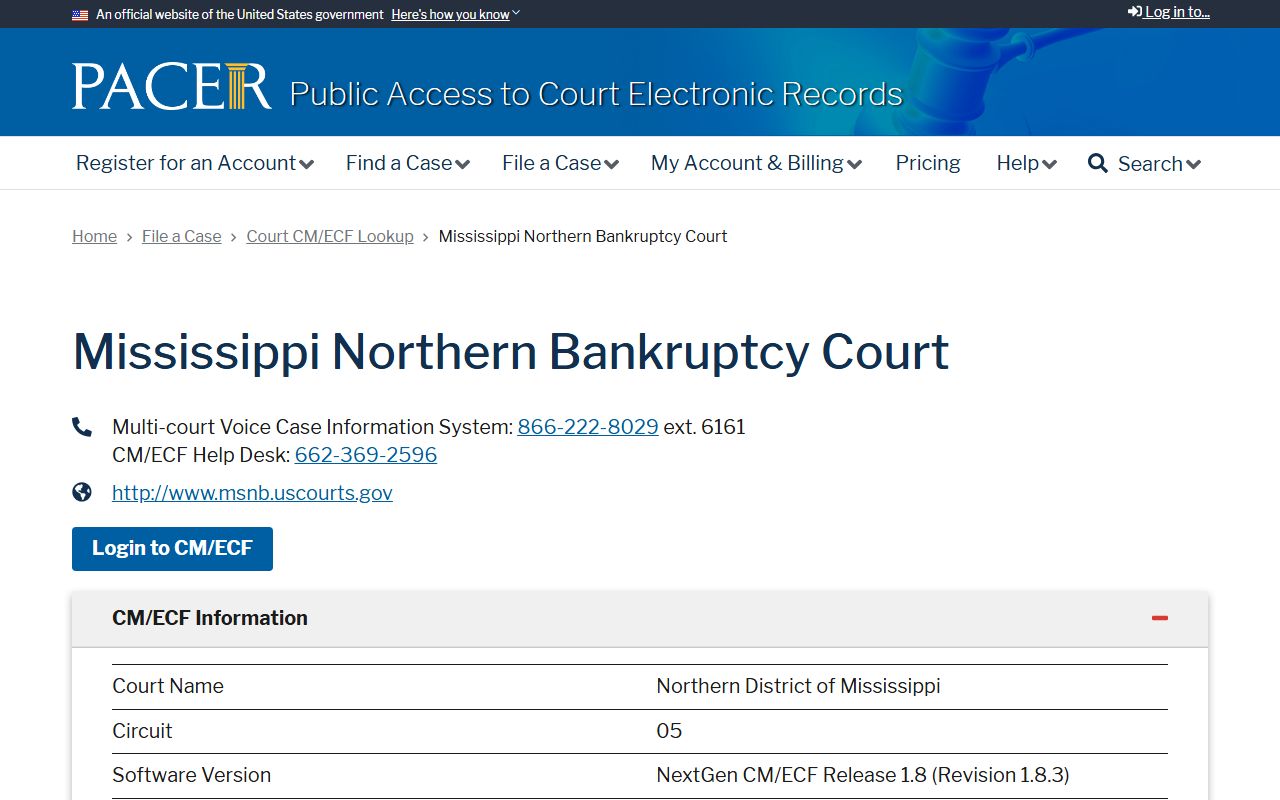
PACER and the court's CM/ECF system hold federal filings, while estate and guardianship files stay with the county Chancery Clerk. Knowing which system holds which record saves a wasted trip. For wills, estates, and protective cases, the path stays local in Fulton.
How Itawamba County Probate Moves From Petition to Closing
A probate case follows a steady path through Chancery Court. The exact steps shift with whether a will exists and whether anyone contests it. The flow below shows the common route an Itawamba County estate takes from the first filing to the final order.
- The person seeking appointment or probate files in Chancery Court through the Chancery Clerk.
- If there is a will, the will and petition go to the court for admission and appointment of the executor.
- If there is no will, an heir or qualified applicant may ask to administer the estate instead.
- The appointed fiduciary may post bond, give notice, gather assets, file an inventory, and handle creditor claims.
- The fiduciary files accountings, and contested wills, heir disputes, and property issues stay under court supervision.
- Final orders, settlements, and closing papers join the Chancery Court file unless a law seals them.
Guardianships and conservatorships follow a parallel path, with annual accounts instead of a one-time settlement. Estate and divorce records both sit with the Chancery Clerk, so the same counter serves several family matters at once. For marriage licenses and the rest of the office's filings, the Itawamba County marriage and divorce records page covers the split between the Circuit and Chancery clerks.