
Criminal Court Records in Itawamba County
A criminal court record is the case file a court clerk opens once the state files charges against a person. In Itawamba County, the Circuit Clerk keeps the general court docket for felony prosecutions, and that docket names the parties, the pleas, and the indictments in each case. The record grows as the case moves. Every filing, hearing notice, order, and ruling is added in date order. By the time a case closes, the file shows the full path from accusation to outcome.
Two trial courts handle most criminal matters here. The Circuit Court hears felony prosecutions, indictments, pleas, trials, and sentencing. The Justice Court handles misdemeanor charges, preliminary hearings, bonds, and traffic offenses outside city limits. City ordinance and city traffic cases belong to Municipal Court. A felony often begins with an arrest and a bond set in Justice Court, then moves to Circuit Court once a grand jury returns an indictment. The court that holds the file depends on the charge level.
Note: A felony file in Itawamba County stays with the Circuit Clerk, while a misdemeanor file stays with the Justice Court office.
How to Search Itawamba County Criminal Court Records
Itawamba County court records do not sit in one public search box. The path depends on the court and the record type. Mississippi Electronic Courts, the statewide e-filing system, feeds the subscriber portal known as PAMEC, where registered users can view Circuit and Chancery case documents that are open to remote access. For felony files, certified copies, and older paper records, the Circuit Clerk counter at the Fulton courthouse remains the core source. The broader set of Itawamba County court records runs through these same channels.
- Open the PAMEC portal and complete the annual registration, since remote case access requires a logged-in account.
- Search by the defendant's name or by the court case number once you are signed in.
- Narrow the results by court, case type, and filing date to find the right criminal file.
- Open the case to read the docket, the plea, and the disposition entries.
- Request a certified copy from the Circuit Clerk when a court or agency needs an authenticated record.
A statewide criminal history check is a separate process from a single case search. PAMEC charges a $10 annual registration fee and a small per-page fee for documents. The system may hide sealed cases and sensitive categories, so the clerk counter is the fallback when a file does not appear online. The First Circuit Court District also posts a public calendar, but the district warns that it may not show every setting.
Stages of an Itawamba County Criminal Case
A criminal case follows a set order, and each step leaves its own mark in the file. The path is easy to trace once you know the stages. Reading the docket in order shows where a case stands today.
Case flow: Charges Filed › Arraignment › Pretrial / Motions › Plea or Trial › Disposition › Sentencing
Charges are filed first, through a Justice Court affidavit, a prosecutor's information, or a grand jury indictment. At arraignment, the judge reads the charges and the defendant enters a plea of guilty, not guilty, or no contest. Pretrial work follows, with motions, evidence exchange, bond arguments, and hearing dates. Most cases end in a plea agreement, but the rest go to trial before a judge or jury. The disposition records the result of each charge. When the result is guilty, sentencing sets the punishment, and those terms are written into the record.
Note: In Itawamba County, a felony charge reaches the Circuit Court only after a grand jury reviews the case and returns an indictment.
Reading Dispositions and Sentences
A disposition is the outcome of a charge, and the sentence is the punishment that follows a conviction. The record uses short terms for both, and each term carries an exact meaning. A few show up in almost every criminal file.
- Guilty
- The defendant admitted the charge or was found guilty at trial, and a sentence follows.
- Not guilty
- A judge or jury found the state did not prove the charge, and the defendant is cleared.
- Dismissed
- The court dropped the charge, sometimes with prejudice so it cannot be refiled.
- No contest
- The defendant did not admit guilt but accepted the punishment, also called nolo contendere.
- Nonadjudication
- The court withheld a finding of guilt while the defendant met set conditions.
- Nolle prosequi
- The prosecutor chose not to pursue the charge.
A sentence may list jail or prison time, probation, fines, court costs, and restitution. Suspended time and probation terms appear in the same entry. Reading the disposition and the sentence together shows the true outcome of a case.
What an Itawamba County Criminal Court Record Shows
Mississippi clerks describe the fields a criminal file holds. The Circuit Clerk's general docket names every party, plea, and indictment, and references each filing to the minute book. A full case file adds the documents behind those entries.
| Field | What It Shows |
|---|---|
| Case Number | The court-assigned identifier used to pull the file and track every filing. |
| Defendant | The person charged, listed against the State of Mississippi as the other party. |
| Charges | Each count, its statute, and its level as a felony or misdemeanor. |
| Plea | The defendant's formal answer, such as guilty, not guilty, or no contest. |
| Disposition | The outcome of each charge, from conviction to dismissal or acquittal. |
| Sentence | Jail or prison time, probation, fines, costs, and restitution after a conviction. |
Financial fields show fines, costs, bond, and restitution with payment status. Electronic files in Mississippi Electronic Courts may carry viewable or downloadable PDFs for registered users. Social Security numbers, minor names, and sealed material are redacted or withheld.
Adult Felony Intervention Court
Not every felony case ends in prison. The First Judicial District runs an Adult Felony Intervention Court, a treatment-based diversion track that serves all seven counties of the district, including Itawamba. The official First Circuit page describes it as an intense probationary court for adults with drug or alcohol-related felony charges.
The First Circuit Court page for the Adult Felony Intervention Court lays out who the program serves and what it demands.
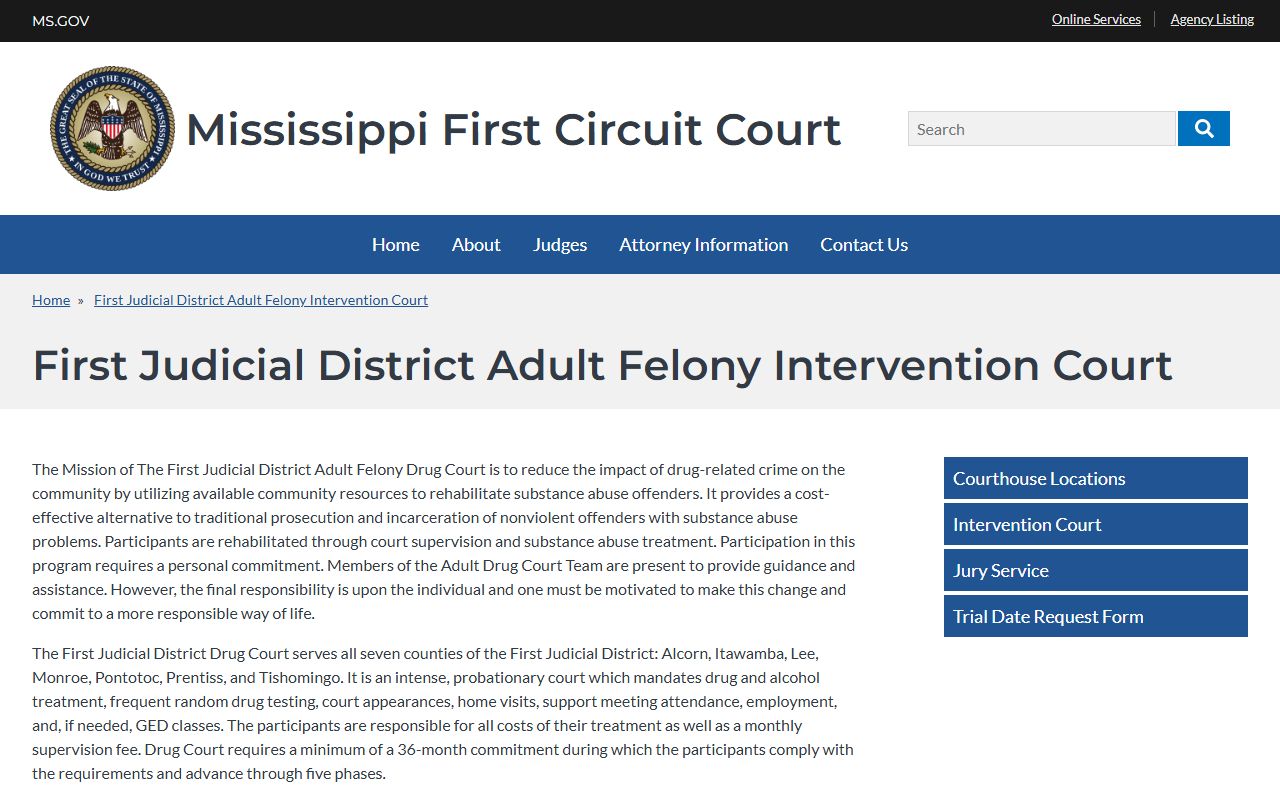
That screenshot shows the program description that drives eligibility questions for Itawamba County felony defendants. The program sets strict conditions, and each one shows up in the case record as a compliance entry.
- Mandatory drug and alcohol treatment.
- Frequent random drug testing.
- Repeated court appearances and home visits.
- Support-meeting attendance and steady employment.
- GED classes where a participant needs them.
Participants pay for their own treatment and a monthly supervision fee. The Circuit Clerk, the District Attorney, or defense counsel can confirm whether a charge qualifies for screening.
Note: The Adult Felony Intervention Court is the only official specialty-court program documented for Itawamba County in the First Circuit sources.
Charges vs. Convictions
Being charged is not the same as being convicted, and a criminal record shows both. A file can list a charge that was later dropped, dismissed, or ended in acquittal. The charge stays in the record even when no conviction follows.
| Charge | Conviction | |
|---|---|---|
| Stage | Accusation | Verdict or plea |
| Burden of Proof | Probable cause | Beyond reasonable doubt |
| Public Record | Yes | Yes |
A charge reflects an accusation backed by probable cause, while a conviction means the state proved the case beyond a reasonable doubt. The charges as the prosecutor files and amends them are tracked in more depth on the Itawamba County court charge records page. Both the charge and the conviction stay open public records unless a court seals or expunges them.
The District Attorney and Itawamba County Prosecutions
The District Attorney prosecutes felony cases in the First Circuit Court District, which covers Itawamba and six neighboring counties. The DA files or presents charges, negotiates pleas, and recommends sentences in Circuit Court. Much of what lands in a felony file starts as a prosecution decision.
Governor Reeves appointed Jason D. Herring as District Attorney for the First Circuit Court District with a term that began in October 2024.
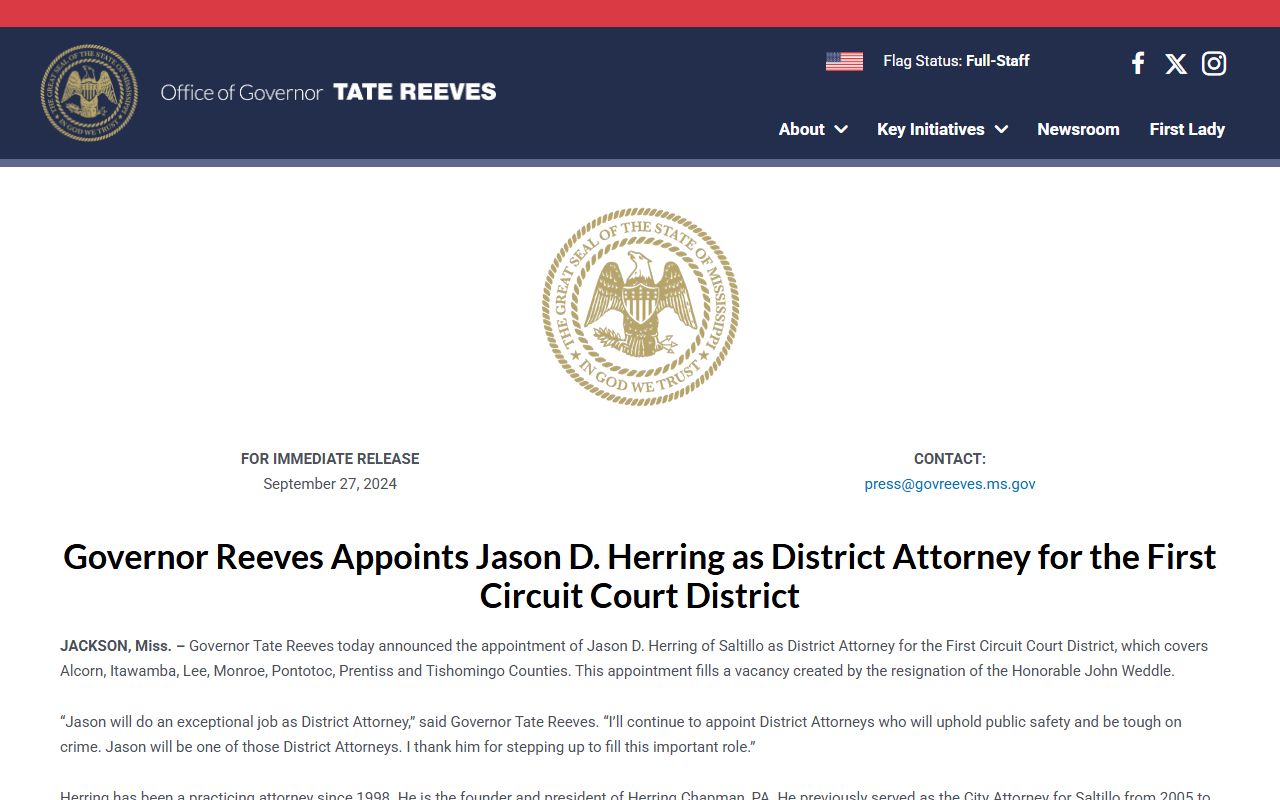
Herring's office handles the felony prosecutions that produce Itawamba County criminal court records. The office works from two locations in the district.
First Circuit District Attorney
302 Franklin Street
P.O. Box 7237
Tupelo, MS 38802
662-432-2802
Monday to Friday, 8:00 a.m. to 5:00 p.m.
The office changed hands in 2024. The Governor appointed John Weddle to the Mississippi Court of Appeals, and Weddle had served as the First Circuit District Attorney before that move.
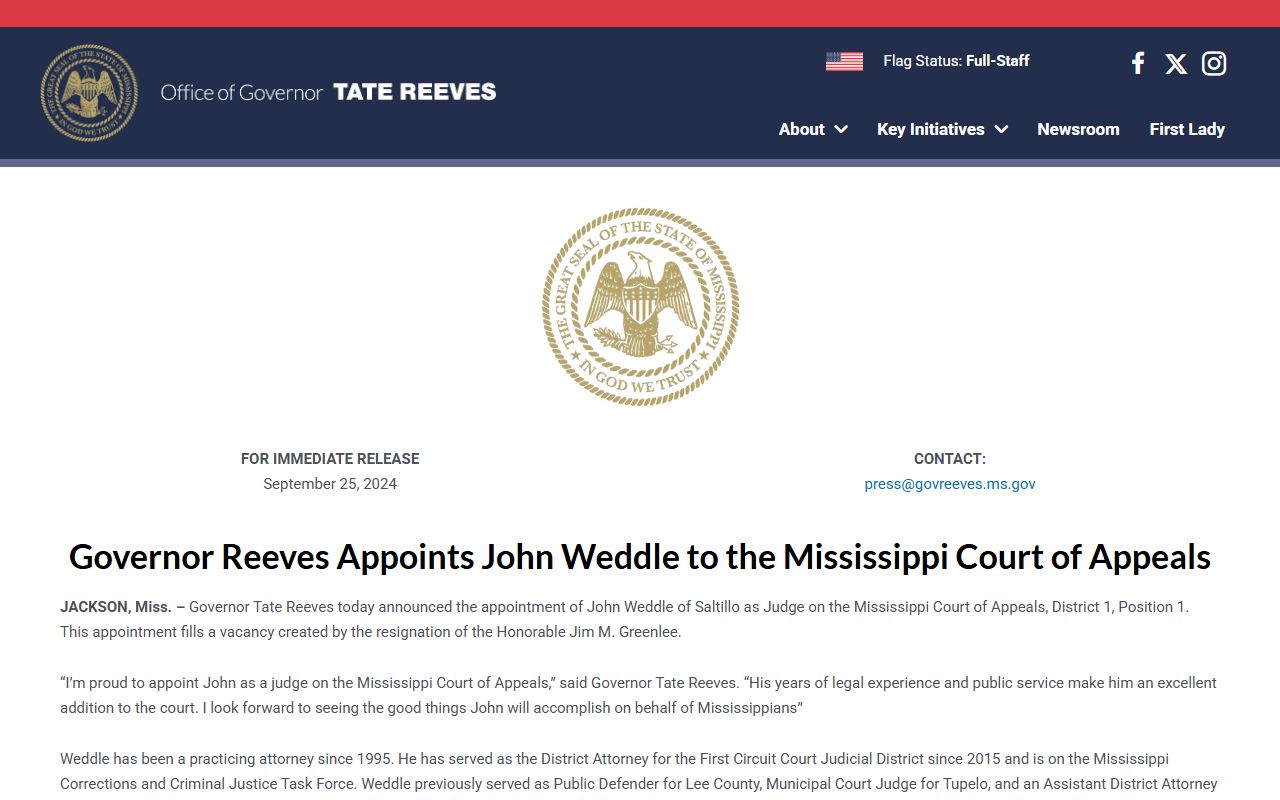
His appointment opened the seat that Herring now fills for Itawamba County prosecutions.
Appeals From Itawamba County Criminal Cases
A criminal case does not always end at sentencing. A defendant may appeal a Circuit Court conviction to the Mississippi Court of Appeals, the state's intermediate appellate court. Appeal records then become part of the case history.
The Mississippi Judiciary announced that Judge John Weddle joined the Court of Appeals in late 2024.
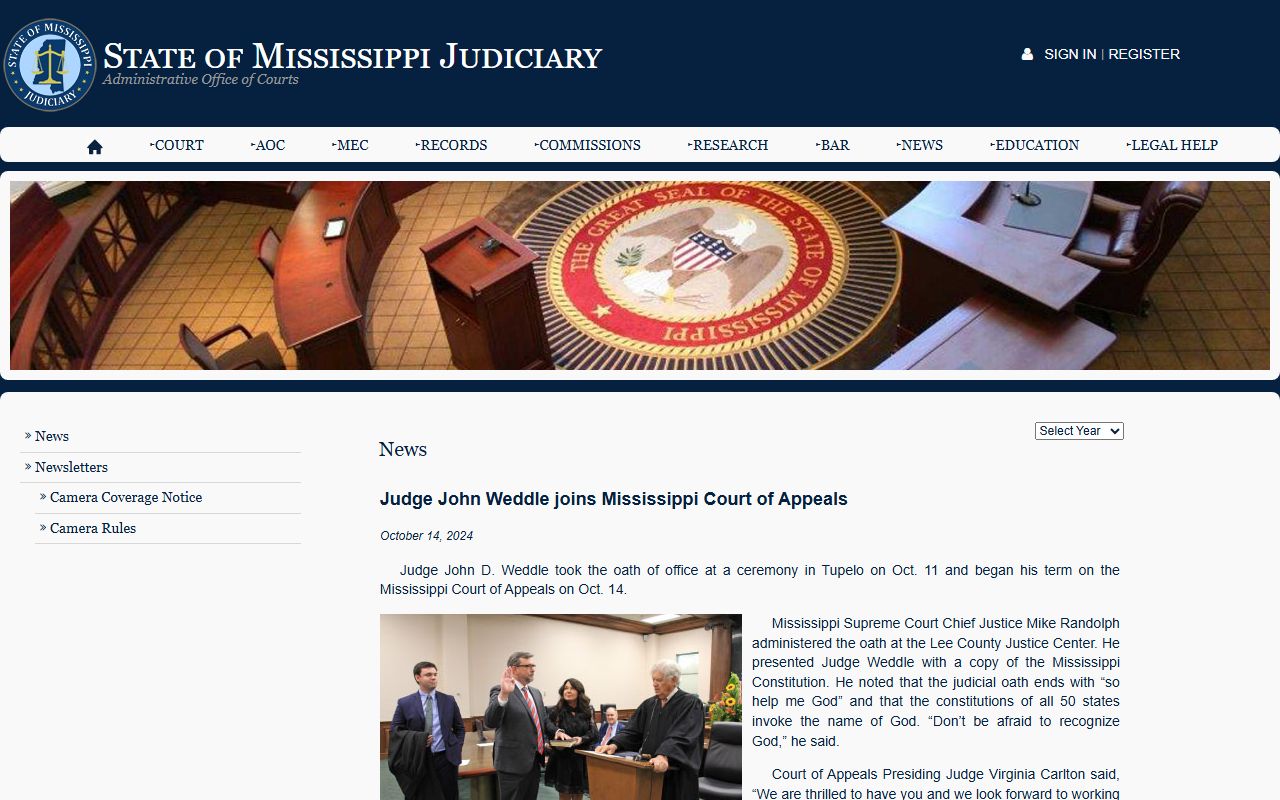
That court reviews appeals assigned from across the state, including First Circuit felony cases tied to Itawamba County. An appeal does not erase the trial record; it adds rulings and orders on top of it.
Public Access to Itawamba County Criminal Records
Mississippi treats most court files as open records. The Public Records Act makes government records available for inspection unless a law says otherwise, and criminal case files generally qualify. Access still runs through the office that holds the record.
Key Statutes:
Miss. Code § 25-61-1 - Mississippi public records are open for inspection unless another law restricts them.
Miss. Code § 99-19-71 - Qualifying arrests, dismissals, and some convictions may be expunged by petition.
A public body with adopted procedures generally answers a request within seven working days. For Itawamba County administrative records that are not pure court files, the county directs requesters to the Chancery Clerk under the Public Records Act, by mail, hand delivery, email, or fax.
Sealed vs. Expunged Records
Sealing and expunging are not the same, though both limit who can see a record. A sealed record is hidden from general public view. An expunged record is treated as if it never existed.
| Sealed | Expunged | |
|---|---|---|
| Visibility | Hidden from public | Destroyed or treated as never existed |
| Law Enforcement | Limited access | Very limited access |
| Eligibility | Set by court order and statute | Qualifying charges under Miss. Code § 99-19-71 |
Mississippi expunction is court-driven. A website cannot remove an Itawamba record; a person must petition the court that handled the matter. Miss. Code § 99-19-71 is the key statute for many adult expunctions, covering listed charges and cases that ended in dismissal, acquittal, or qualifying diversion.
- Identify the arresting agency, the court, the case number, and the charge.
- Confirm the disposition, the sentence-completion date, and any fines or costs still owed.
- Pull the file from Justice Court for a misdemeanor or the Circuit Clerk for an indicted felony.
- File the expunction petition with the court named in the statute.
- Verify eligibility with the clerk, the prosecutor, or counsel before relying on a generic checklist.
Note: Expunction eligibility is charge-specific, and violent crimes, sex-offense registrations, and many listed felonies cannot be cleared.
Federal Criminal Cases Tied to Itawamba County
Some crimes in Itawamba County are prosecuted in federal court, not the Circuit Court. The county sits in the U.S. District Court for the Northern District of Mississippi, with the nearest courthouse in Aberdeen. Federal cases follow a separate record system.
The U.S. Attorney for the Northern District of Mississippi prosecutes federal crimes that arise in the county.
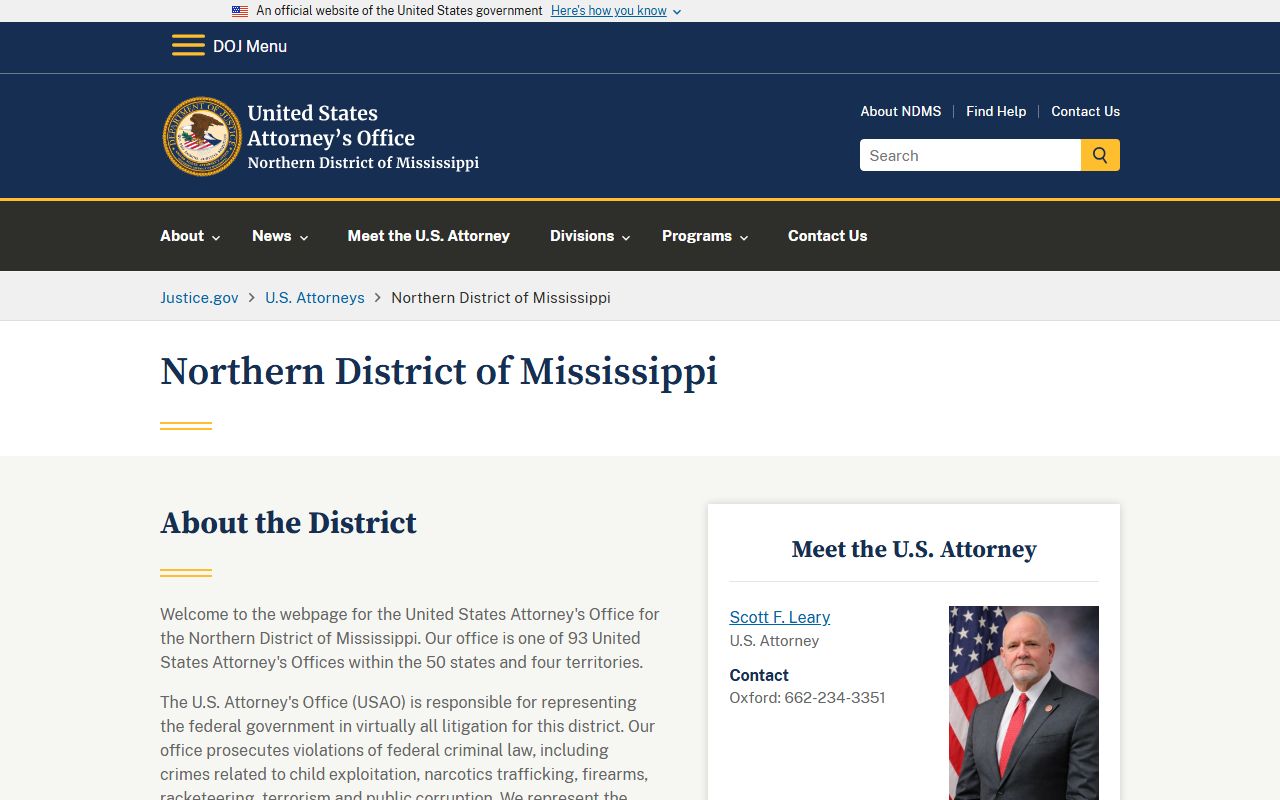
Federal criminal records are searched through PACER and the court's CM/ECF system, not the county Circuit Clerk. A federal case and a state case can run on separate tracks even when they grow from the same event.
Background Check Considerations
A casual name lookup is not a background check. Employers, landlords, and licensing boards that make decisions must follow the federal Fair Credit Reporting Act and use a regulated agency. A county case search is useful for personal reference, but it is not a compliant screening tool.
Important: Criminal court records pulled from public portals are not consumer reports under the FCRA, and they may not be used for employment, tenant, credit, or insurance decisions.
Restricted Criminal Court Records in Itawamba County
Not every criminal matter is open to the public. Youth Court records involving children are controlled by statute and are not ordinary public files. Miss. Code § 43-21-255 governs law-enforcement records involving children and limits who may receive them. Sealed and expunged cases drop out of public search results entirely.
When a file does not appear online, the cause may be a restriction rather than a gap. The Circuit Clerk counter is the place to confirm whether a record is sealed, restricted, or simply not yet imaged. Parties, attorneys, and authorized agencies may reach records that the general public cannot. Ongoing matters and sensitive exhibits may also be withheld until a case closes.
Note: Do not assume a missing case means no record exists, because sealed and juvenile files are removed from public view by law.